
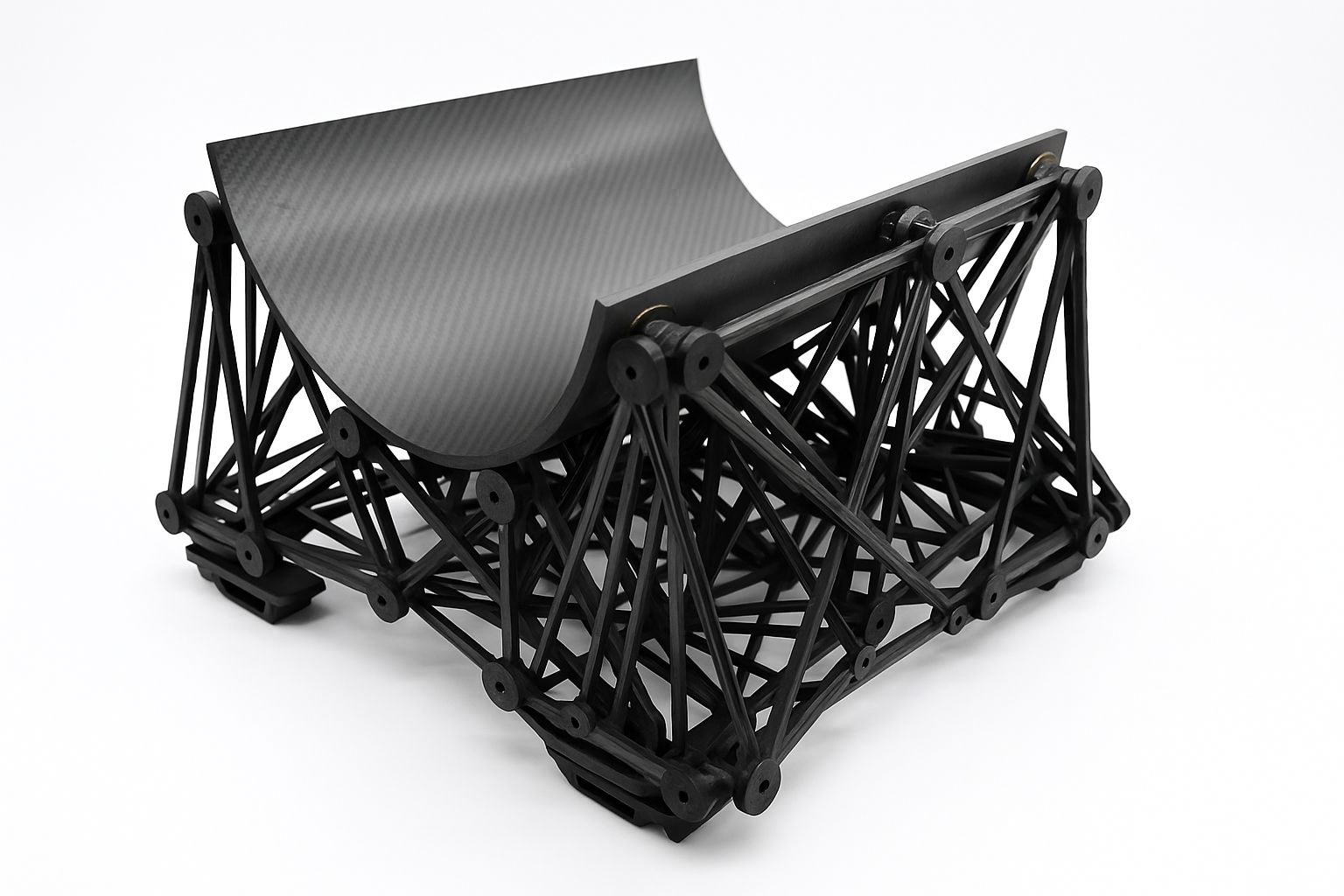
Composite Tool with
GRAM -Sub-structure
2025
Carbon fiber tooling for aerospace composite parts provides a natural advantage in modern composite manufacturing. As aerospace structures increasingly rely on carbon fiber laminates, it is important that the tooling behaves similarly to the part during processing. Unlike traditional metal tooling, carbon fiber composites have a comparable coefficient of thermal expansion to the parts being cured. During high-temperature autoclave cycles, this compatibility minimizes differential expansion, reducing residual stresses, deformation, and dimensional inaccuracies once the part cools down.
Using composite tooling therefore improves dimensional stability and helps maintain tighter tolerances throughout the manufacturing process. In addition, carbon fiber offers a very high stiffness-to-weight ratio, allowing the tooling to remain structurally rigid while significantly reducing overall mass. Lower weight simplifies handling and reduces thermal mass, which can contribute to faster heating cycles and improved energy efficiency.
Our approach further enhances these advantages by manufacturing the tooling using robotic filament winding. This automated process enables precise control of fiber orientation, allowing the structure to be optimized along load paths while using less material. It also enables more complex and integrated tooling geometries that would be difficult or costly to produce with traditional machining.
As a result, robotic filament winding accelerates tooling production, reduces material usage and weight, and lowers manufacturing costs. The combination of matched thermal behavior, optimized structural design, and automated production creates a tooling solution that improves dimensional accuracy, production efficiency, and overall cost-effectiveness for aerospace composite manufacturing.

Features & Benefits
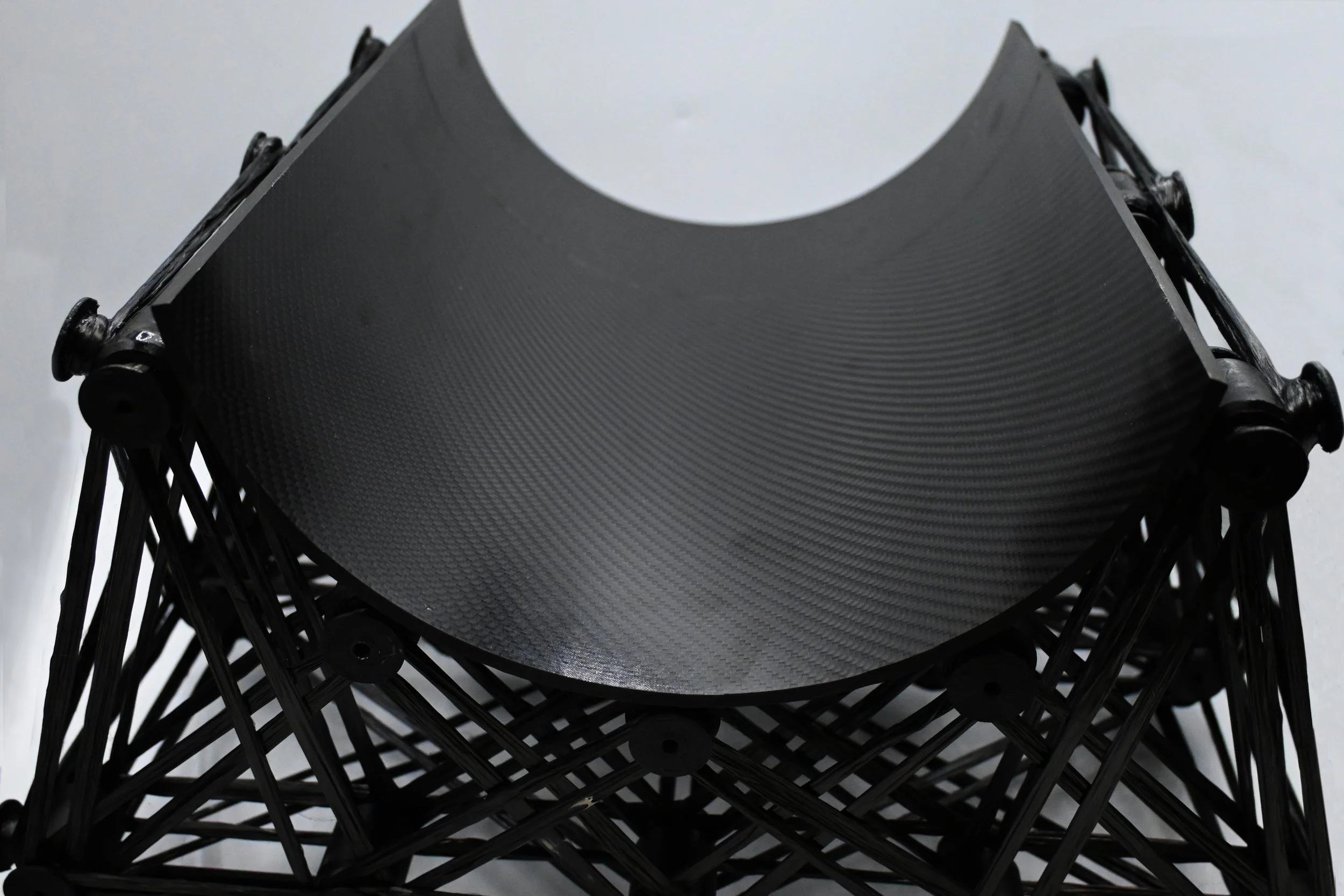
▪ Coefficient of Thermal Expansion (CTE) adjustable acc. tooling laminate due to use of selectable fiber types and resin systems usable up to200°C. -> up to CTE in the range of 1-3 x 10⁻⁶ / K
▪ Up to70 % lighter as current composite laminate sub-structures in 6-10 mm laminate thickness.
▪ Pre-production of too lsub-structure sat Gradel LW for customers.
▪ Due to GRAM Ultra-Lightweight -> easy and fast tool transport in house to the needed manufacturing places, especially for big tools
▪ No master tool to manu facture GRAM structure necessary-> high cost saving
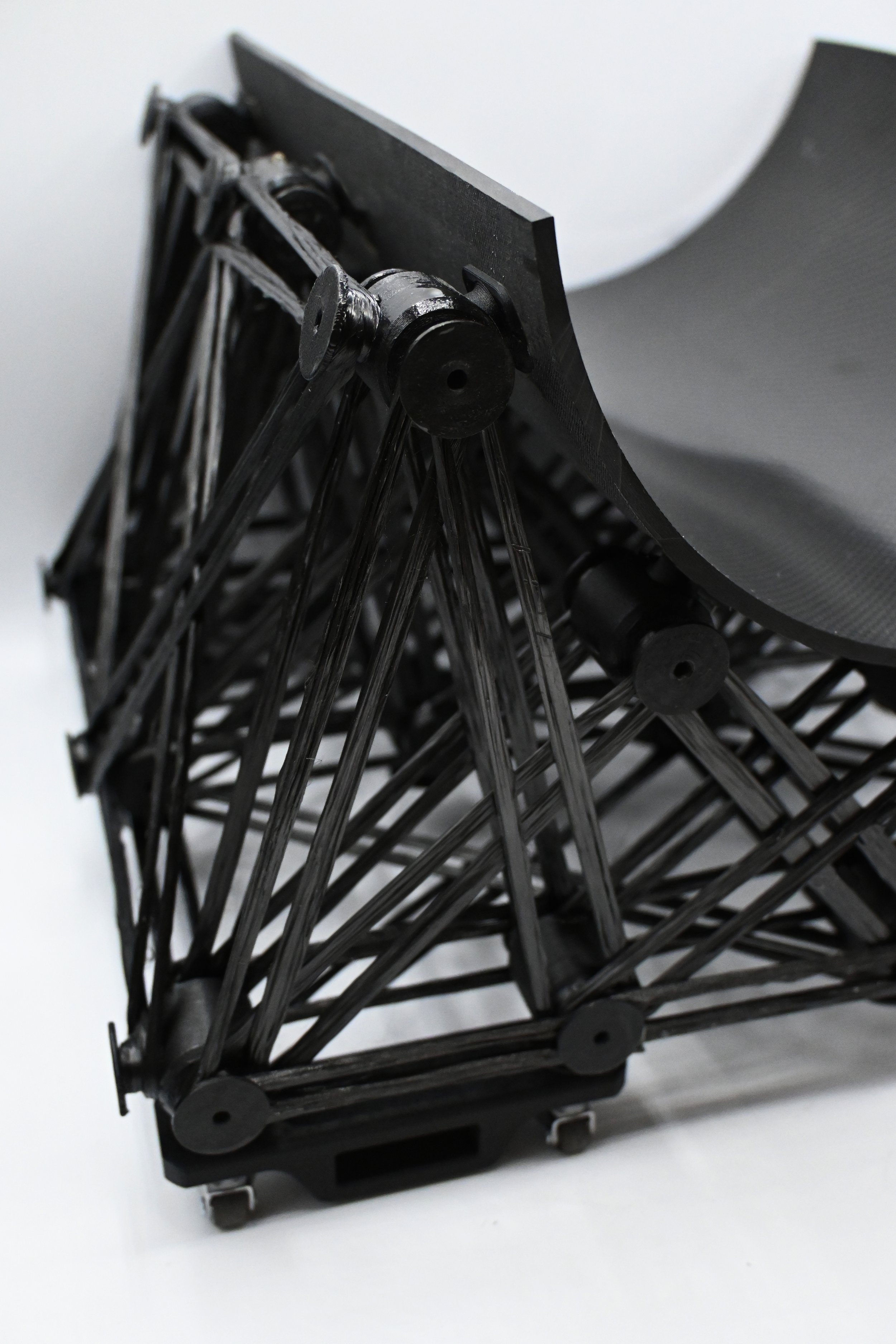
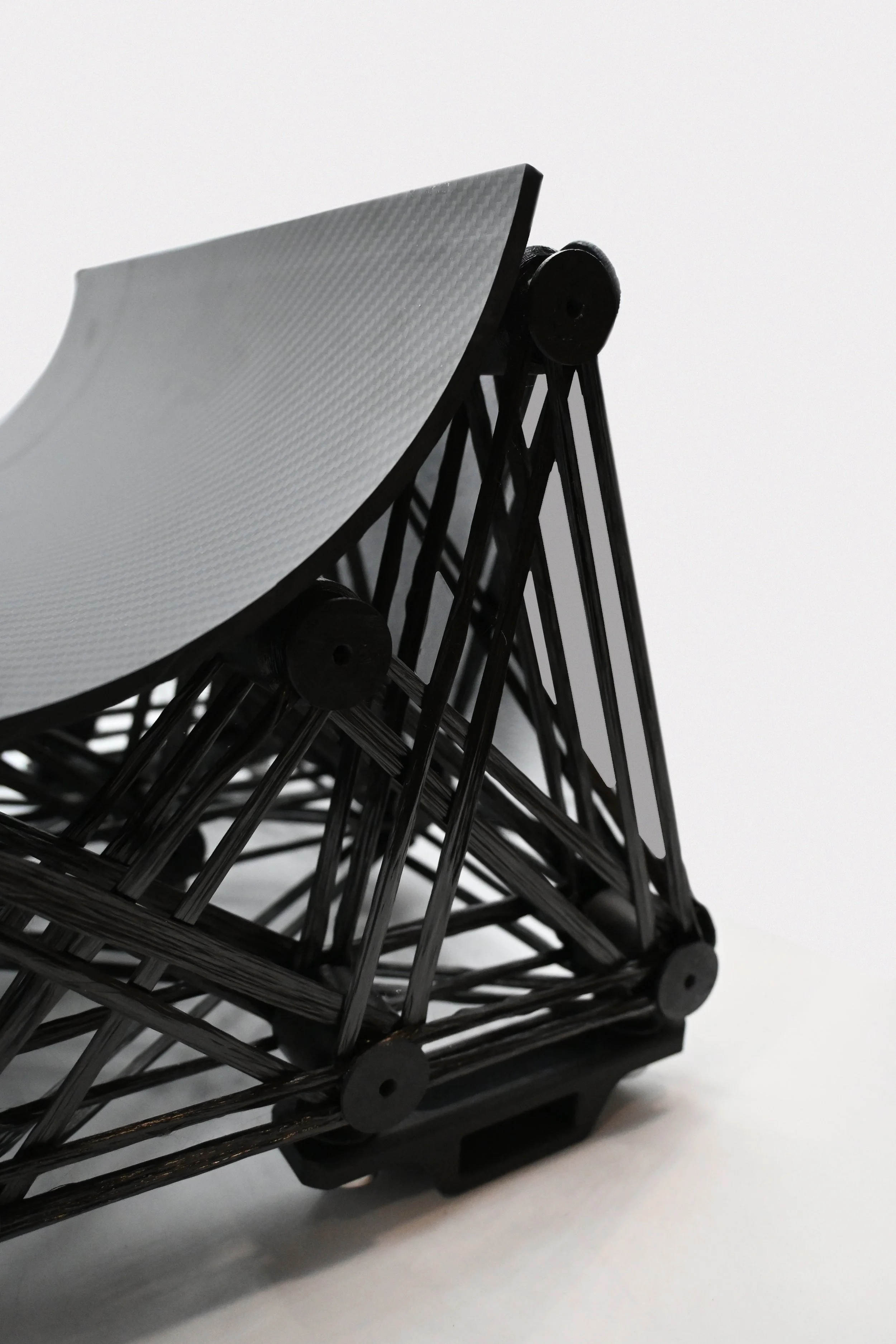
▪ Easy fixation of GRAM Tooling sub-structureon the back side of the composite tool-> much lower labor and material cost.
▪ Much lower mass and «open» sub-structure reduce the heat-upand cool down rate of the tool surface.
▪ Recyclable thermoset GRAM sub-structure by using specific Gradel LW resin systems.
▪ Price and weight lower than current existing tool sub-structure solutions.